- Top-rated Best Lawyer in Ghaziabad
- +91 9616166166
- [email protected]


Drafting of Written Statement – Statutory Essentials, Structure and Practical Insights
February 12, 2026
Best Family & Divorce Lawyers in Vaishali – Complete Legal Guide for 2026
February 17, 2026
A bail application is a formal request submitted before a competent criminal court seeking the release of an accused person during the pendency of trial. Under the newly enacted Bharatiya Nagarik Suraksha Sanhita, 2023 (BNSS 2023), provisions relating to bail are primarily governed by Section 48 BNSS, while situations involving warrants and appearance may involve Section 72 read with Section 48 BNSS.
This article explains the structure, legal grounds, and court considerations involved in filing a bail application.
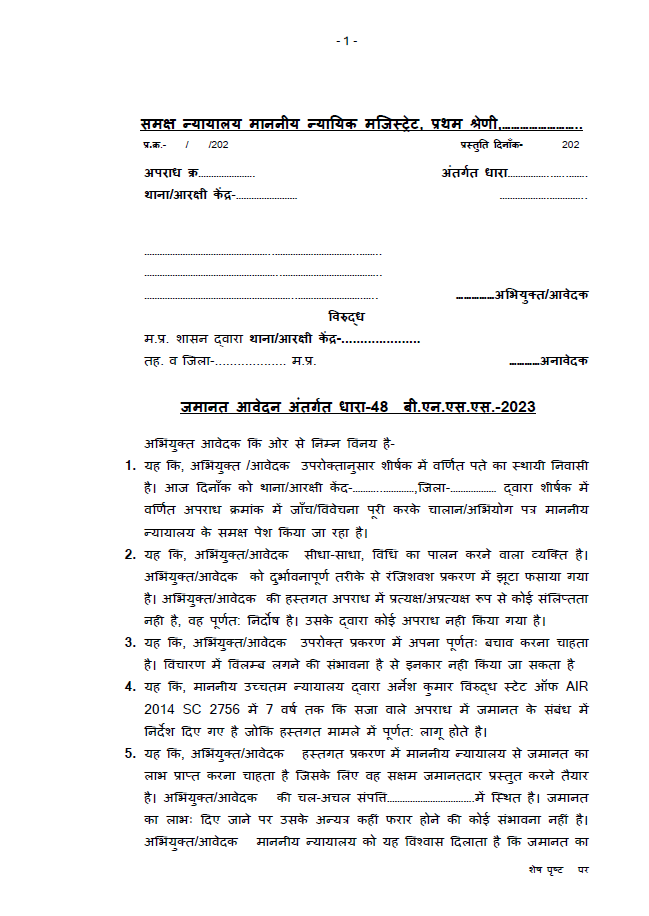
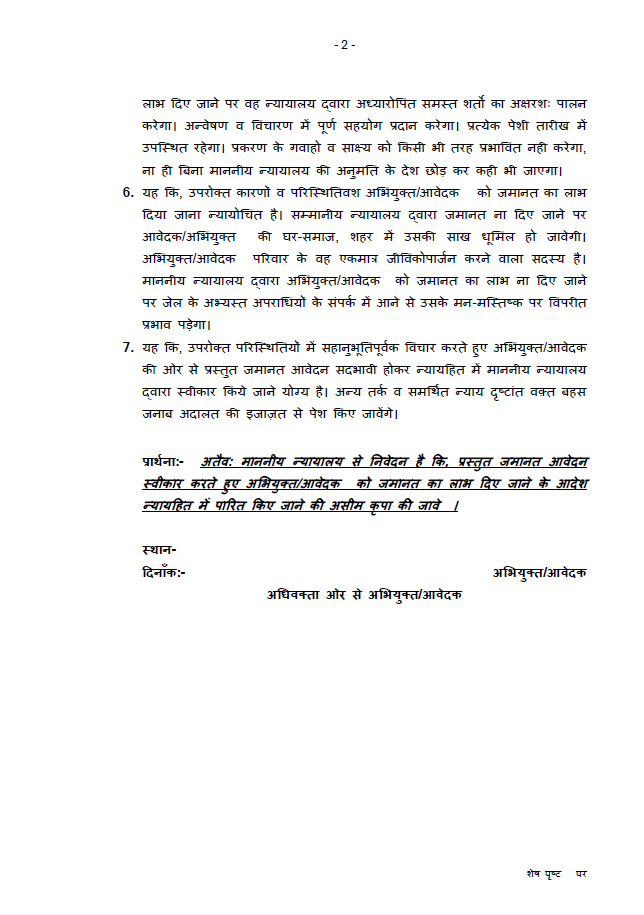
1. Bail Application under Section 48 BNSS, 2023
Section 48 BNSS provides the legal framework for granting bail in appropriate cases. A bail application typically includes:
Key Components of the Application:
1. Court Details
- Name of the Court (e.g., Judicial Magistrate First Class)
- Case number
- Crime number
- Police Station details
- Sections involved
2. Parties
- Name of the Accused/Applicant
- Name of the State (through Police Station concerned)
3.Grounds for Bail
The applicant generally submits the following legal grounds:
- The accused is innocent and falsely implicated.
- The accused is a law-abiding citizen with no criminal history.
- The investigation is complete or the accused is no longer required for custodial interrogation.
- The accused is willing to cooperate with the trial.
- There is no likelihood of tampering with evidence or influencing witnesses.
- The accused undertakes to comply with all court-imposed conditions.
4. Legal Precedents
Courts often rely upon landmark judgments such as:
- Bail is the rule, jail is the exception.
- Offences punishable up to seven years often warrant liberal consideration for bail, depending on facts and circumstances.
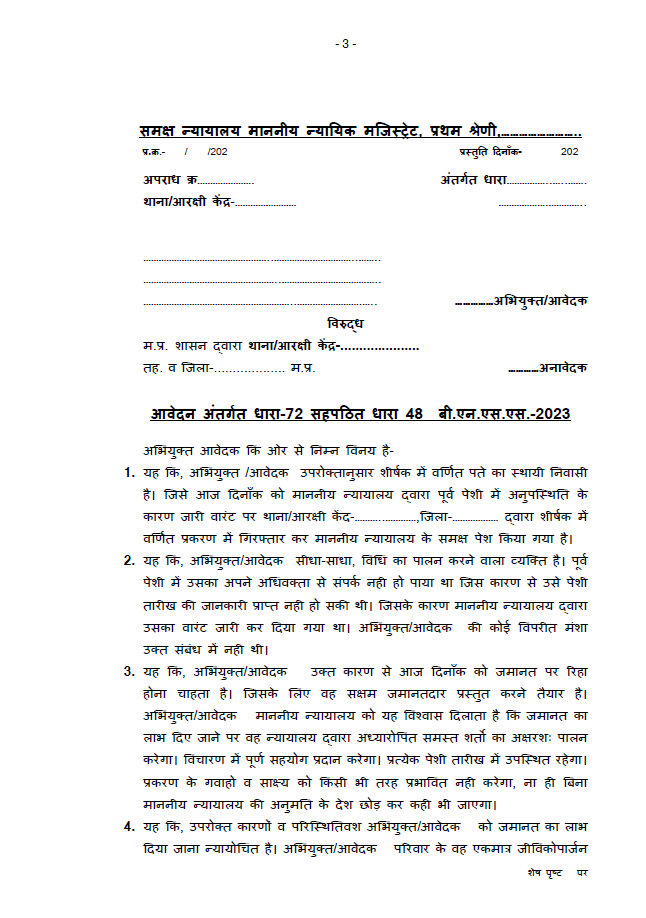
2. Bail under Section 72 read with Section 48 BNSS, 2023
This type of application is filed when:
- A warrant has been issued due to non-appearance.
- The accused was absent for valid reasons.
- The accused seeks cancellation of warrant and grant of bail.
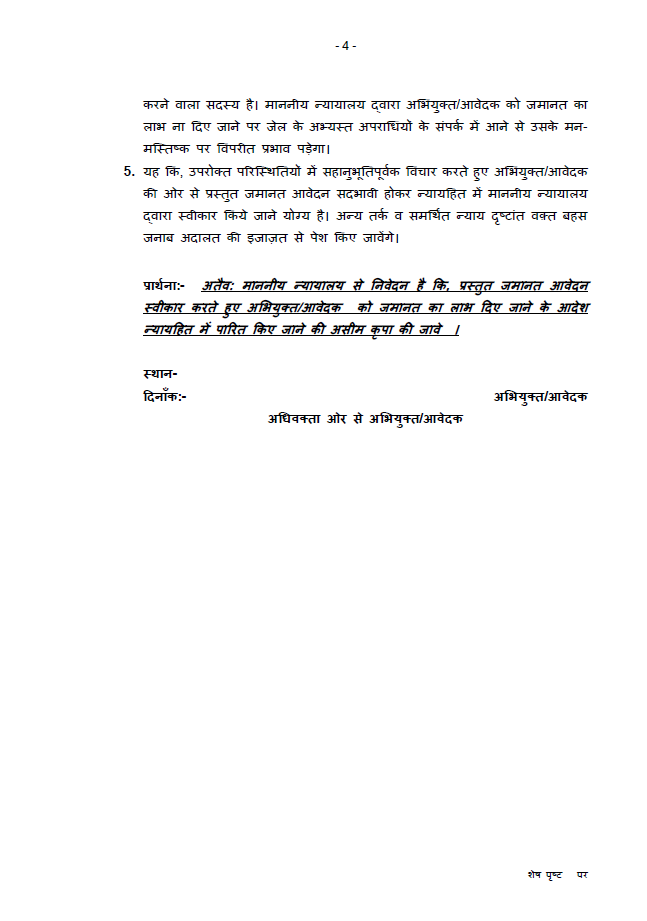
Important Grounds in Such Applications:
- The absence was neither intentional nor deliberate.
- The accused was unaware of the hearing date.
- The accused undertakes to appear regularly in future.
- The accused is ready to furnish surety/bail bond.
- The accused assures the court that he/she will not misuse the liberty granted.
3. Factors Considered by the Court
While deciding a bail application, the court examines:
- Nature and gravity of the offence
- Role of the accused
- Criminal antecedents (if any)
- Possibility of absconding
- Likelihood of influencing witnesses
- Stage of investigation
Courts also consider humanitarian aspects such as:
- The accused being the sole earning member of the family
- Medical conditions
- Length of custody
4. Conditions Commonly Imposed by Courts
If bail is granted, the court may impose conditions such as:
- Furnishing bail bond and surety
- Regular appearance before the court
- Not leaving jurisdiction without permission
- Not influencing witnesses
- Not committing similar offences
Violation of these conditions may result in cancellation of bail.
5. Structure of a Standard Bail Application
A properly drafted bail application includes:
- Title and Court Name
- Case Details
- Description of the Applicant
- Facts of the Case
- Legal Grounds
- Undertaking by the Accused
- Prayer Clause requesting grant of bail
- Date and Signature
Conclusion
A bail application under Section 48 BNSS, 2023 is a crucial legal remedy that protects the fundamental right to personal liberty. Courts balance the interests of justice with individual freedom while deciding such applications. Proper drafting, clear legal grounds, and compliance with procedural requirements significantly improve the chances of bail being granted. If you are facing criminal proceedings and require assistance in filing a bail application, it is advisable to consult an experienced criminal lawyer who can present your case effectively before the court.