Lawyer in Ghaziabad is a leading law firm with its presence in India and abroad, operating out of offices in: Delhi, Noida and Ghaziabad. It is one of the best law firms in Delhi, Noida and Ghaziabad with an exceptional experience and reputation in the legal arena.
- Legal Consultation
- Transparent Communication
- Results-Oriented
Cheque Bounce Case Lawyer in Ghaziabad
138 NI Act Case Lawyer in Ghaziabad
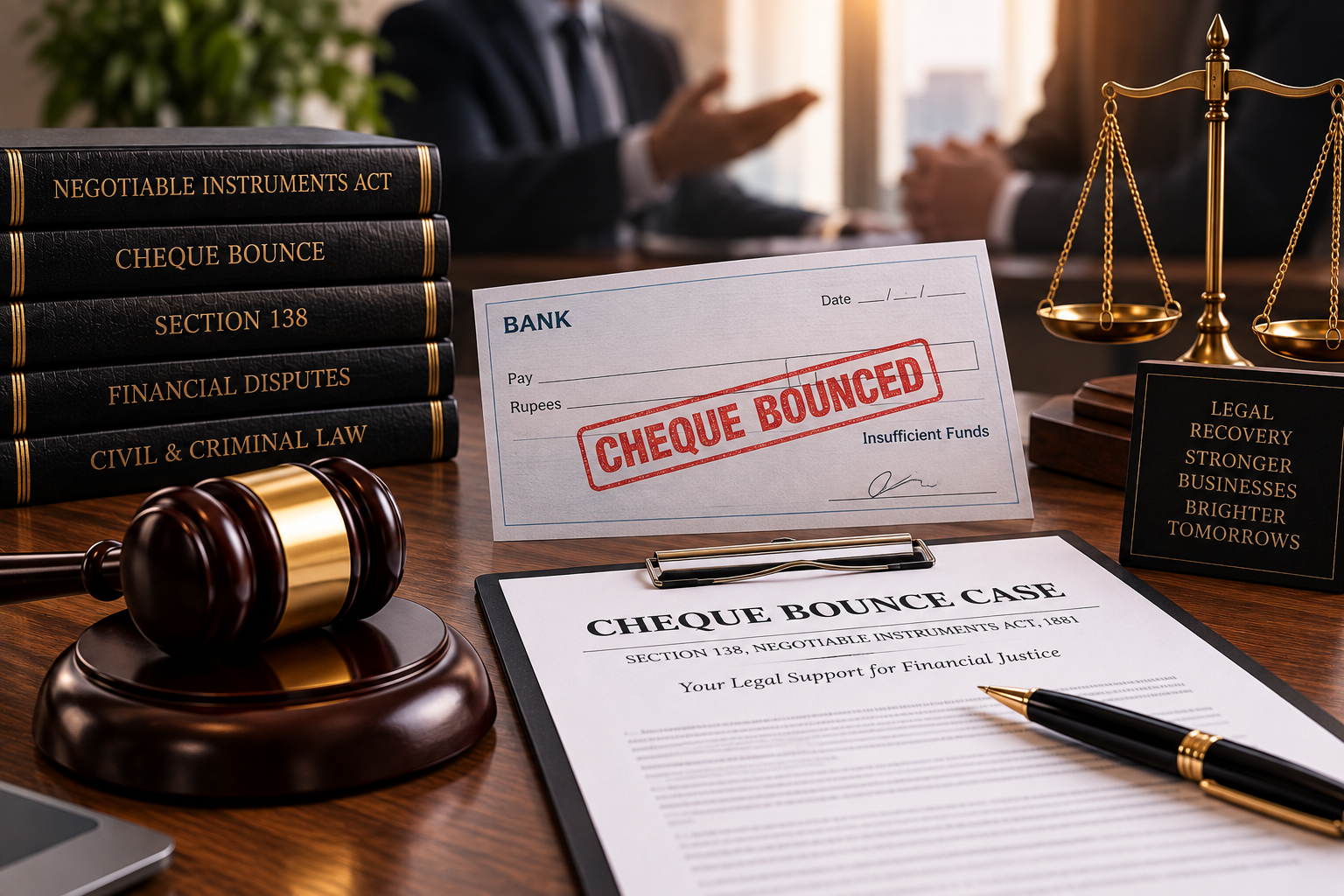
A cheque bounce is not just a financial issue; it is a legal offense that can have severe consequences for the issuer. It is one of the most common financial disputes in India, affecting individuals, businesses, and institutions. When a cheque is dishonored, it can lead to loss of trust, financial distress, and legal complications for both parties involved. A bounced cheque disrupts cash flow, delaying crucial transactions and causing frustration for creditors. This issue is particularly serious in business environments where post-dated cheques or mutual agreements are common. In India, cheque dishonor is governed by Section 138 of the Negotiable Instruments Act, 1881, which provides legal protection to the payee. This law ensures that an issuer cannot escape liability by issuing a cheque without sufficient funds. Payees can file legal complaints against defaulters and seek financial compensation. Addressing cheque bounce cases swiftly is crucial, as delays can weaken the complainant’s position. At Lawyer in Ghaziabad, we offer expert legal assistance to ensure our clients recover their dues. Whether you are an individual, business owner, or creditor, our experienced legal team provides tailored solutions with precision, dedication, and expertise.
What is a Cheque Bounce Case?
A cheque bounce case occurs when a cheque that has been issued for payment is returned unpaid by the bank. This can happen for several reasons, ranging from insufficient funds in the account to technical errors such as signature mismatches or incorrect cheque details. Regardless of the reason, a bounced cheque is considered a breach of financial responsibility and can lead to legal consequences for the issuer. When a cheque is dishonored, the payee is entitled to take legal action against the issuer to recover the amount due. Cheque dishonor is a significant issue in India, where millions of cheques are processed daily for various financial transactions. Many businesses rely on post-dated cheques as a form of security in credit-based transactions. However, when a cheque is dishonored, it can cause financial losses, disrupt operations, and damage business relationships. Individuals who lend money or receive payments through cheques also face serious difficulties if their cheques bounce. The law provides a structured legal framework to address these disputes, ensuring that the affected party receives justice. To initiate legal action in a cheque bounce case, the payee must follow a specific legal process, including sending a legal notice to the issuer and, if necessary, filing a complaint in court. The legal provisions for cheque dishonor cases are designed to protect the financial interests of individuals and businesses while discouraging fraudulent financial practices. Understanding the legal remedies available and taking immediate action is crucial to ensuring a favorable resolution in cheque dishonor disputes.
Common Reasons for Cheque Bounce
A cheque can be dishonored for several reasons, each of which can lead to legal consequences for the issuer. Understanding the reasons behind cheque dishonor can help individuals and businesses take preventive measures and ensure that their cheques are processed smoothly. Some of the most common reasons include:
- Insufficient Funds
- Signature Mismatch
- Account Closed or Inactive
- Overwriting or Incorrect Details
- Stop Payment Instructions
- Technical Errors or Bank Issues
One of the most frequent reasons for cheque bounce is that the issuer’s bank account does not have sufficient balance to cover the cheque amount. When a cheque is presented for payment and the account does not have enough funds, the bank refuses the transaction, leading to cheque dishonor. This situation often occurs when individuals issue cheques without verifying their account balance, leading to unintended legal consequences. If the payee presents the cheque multiple times and it is repeatedly dishonored, it can further strengthen the legal case against the issuer.
A cheque is also dishonored if the signature on it does not match the one registered with the bank. Banks are very particular about signature verification, and even a slight variation in the signature style can lead to cheque rejection. Signature mismatches may occur due to changes in handwriting over time, rushed or careless signing, or clerical errors. Since banks follow strict guidelines to prevent forgery, they do not process cheques with questionable signatures, resulting in dishonor. This issue can be avoided by ensuring that the signature on the cheque is clear, consistent, and exactly matches the bank’s records.
If a cheque is issued from an account that has been closed or remains inactive for an extended period, the bank automatically rejects the cheque. Some individuals or businesses may issue cheques from accounts that are no longer operational, either unintentionally or as a fraudulent practice. Issuing a cheque from a closed account is a serious offense and can attract hefty fines and legal penalties. This situation can also lead to criminal charges if it is found that the issuer deliberately used a non-operational account to avoid making payments.
Banks reject cheques that contain unauthorized corrections, overwriting, or unclear handwriting to prevent fraudulent transactions. Any mistake in the payee’s name, amount, date, or signature can lead to cheque dishonor. Overwriting on cheques is considered suspicious and is not accepted by banks to ensure the integrity of financial transactions. If a mistake is made while writing a cheque, it is advisable to discard it and issue a fresh one instead of making corrections, as banks are likely to reject cheques with visible alterations.
A cheque can also be dishonored if the issuer gives stop-payment instructions to their bank before the cheque is processed. While there are valid reasons for stopping a cheque, such as disputes over transactions or lost cheques, using stop-payment as an excuse to avoid financial obligations can result in legal action. If a payee believes that the stop-payment instruction was issued maliciously to evade payment, they can file a legal complaint against the issuer. Courts take a strict view of fraudulent stop-payment cases, and the issuer may face financial penalties or even imprisonment.
In some cases, cheque dishonor occurs due to technical reasons, such as a damaged cheque, bank server issues, or MICR (Magnetic Ink Character Recognition) scanning failures. While these problems are not the fault of the issuer or the payee, they can still cause inconvenience and delays in financial transactions. To avoid such issues, it is advisable to use new and undamaged cheques and ensure that the cheque details are printed clearly.
How We Can Help – Our Legal Services
At Lawyer In Ghaziabad, we offer comprehensive legal services to help clients resolve cheque bounce disputes and recover their money efficiently. Our team of experienced legal professionals specializes in handling cheque dishonor cases with precision and dedication, ensuring that our clients receive the justice they deserve. We understand the financial difficulties that come with a bounced cheque, and we work tirelessly to ensure that our clients get a swift resolution. Our legal services include drafting and sending legal notices, filing criminal complaints under Section 138, providing court representation, negotiating out-of-court settlements, and ensuring maximum financial recovery for our clients. We also assist in claiming interest, penalties, and legal expenses to ensure that our clients are fully compensated for their losses.
Need Legal Assistance? Contact Us Today!
If you are facing a cheque bounce issue, it is crucial to take immediate legal action to safeguard your financial interests and prevent further complications. At Lawyer in Ghaziabad, we understand how devastating a dishonored cheque can be for individuals and businesses. Whether you're a creditor trying to recover your payment or a business owner concerned about the reputation and financial stability of your operations, we are here to offer effective legal solutions. Our team of experienced legal professionals specializes in handling cheque bounce cases and ensuring that our clients receive timely and fair compensation. We provide comprehensive services, from drafting and sending legal notices to representing you in court proceedings. Our primary goal is to help you recover the cheque amount, interest, and other expenses, while also ensuring that the defaulter is held accountable under the Negotiable Instruments Act. With our in-depth understanding of the legal process and proven track record, we make the entire process smoother and more efficient for you. Don’t let a bounced cheque cause you financial loss or unnecessary stress. Contact us today to schedule a consultation and get started on the path to resolving your cheque bounce case. Your financial recovery is just a call away.
Conclusion
Cheque bounce cases can be frustrating and financially distressing, but with the right legal support, you don’t have to face them alone. Whether you are an individual or a business owner, experiencing the dishonor of a cheque can disrupt cash flow and cause unnecessary delays in critical financial transactions. However, it is essential to take swift legal action to recover your dues and prevent long-term repercussions. The law under the Negotiable Instruments Act, 1881 is on your side, and with professional legal assistance, you can ensure that justice is served. At Lawyer in Ghaziabad, we are fully dedicated to offering expert legal services to clients facing cheque bounce issues. Our team of highly experienced and knowledgeable professionals works tirelessly to safeguard your financial interests and guide you through every step of the process. From sending legal notices to representing you in court proceedings, we will ensure that the matter is handled with the utmost professionalism and urgency. We understand how critical it is to recover lost funds, and we take a personalized approach to each case to maximize the chances of success. Don’t let a bounced cheque hold you back. Contact us today and take the first step toward a prompt resolution. Let us help you regain your financial stability and peace of mind. Your legal rights and recovery are our top priorities, and we are here to help you navigate this challenging process with confidence.
A cheque bounce is not just a financial issue; it is a legal offense that can have severe consequences for the issuer. It is one of the most common financial disputes in India, affecting individuals, businesses, and institutions. When a cheque is dishonored, it can lead to loss of trust, financial distress, and legal complications for both parties involved. A bounced cheque disrupts cash flow, delaying crucial transactions and causing frustration for creditors. This issue is particularly serious in business environments where post-dated cheques or mutual agreements are common. In India, cheque dishonor is governed by Section 138 of the Negotiable Instruments Act, 1881, which provides legal protection to the payee. This law ensures that an issuer cannot escape liability by issuing a cheque without sufficient funds. Payees can file legal complaints against defaulters and seek financial compensation. Addressing cheque bounce cases swiftly is crucial, as delays can weaken the complainant’s position. At Lawyer in Ghaziabad, we offer expert legal assistance to ensure our clients recover their dues. Whether you are an individual, business owner, or creditor, our experienced legal team provides tailored solutions with precision, dedication, and expertise.